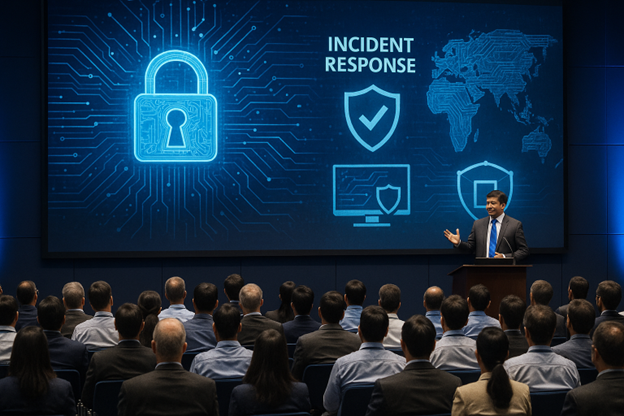
Cybersecurity Leadership and Digital Governance Events to Watch in 2026

Conversations around security issues rarely stay within the domain of the tech community anymore. Governments, tech organizations, and even the authorities have begun to converge at special forums where policy issues, infrastructural security, data security, and the latest tech developments intersect in real-time. Conferences have become a strategic platform rather than simply a networking platform.
Some of the key issues raised by analysts include the importance of forums such as the best cybersecurity conferences 2026 as critical gatherings aimed at examining the perspectives of governments, organizations, and tech innovators in the development of digital security frameworks.
Why Cybersecurity Conferences Matter for Public Sector Innovation
In contemporary systems of government, cybersecurity is no longer relegated to the status of a mere afterthought in the design and implementation of technology solutions. Instead, it is at the heart of digital governance approaches and has a significant bearing on how services are delivered, how the nation is secured, and how citizens are maintained as loyal stakeholders in the process. It is in conferences focused on cybersecurity that policy and implementation meet in the middle.
In these conferences, policy makers engage in dialogue with those who provide the infrastructure, those who design the software, and those who are in charge of the nation’s security, among others. It is in these conferences that theory is transcended and frameworks are built, collaborative approaches to defense are discussed and refined, and regulatory approaches are conceived in ways they otherwise would not be.
Cross-Sector Collaboration Drives Practical Security Frameworks
However, during such high-level conferences, the cybersecurity strategy is not left to the IT teams alone; rather, government representatives, cloud architects, infrastructure providers, and many other concerned individuals work towards the development of an integrated security approach that can protect the digital infrastructure on a national scale.
The reason digital governance platforms bring many public services into contact with each other is that security strategies must be developed through coordinated architectures. Identity management systems, cloud services, and payment systems are always in constant interaction with each other; conferences can bridge such gaps and enable the development of security strategies that can be integrated with each other rather than being developed as individual security mechanisms.
Security Discussions Extend Beyond Technology
However, technology is not sufficient in addressing systemic vulnerabilities. Instead, policy design, procurement arrangements, and regulatory control, as well as workforce capability development, are significant in building the strength of a nation’s digital system. Conferences provide opportunities for leaders to consider all these aspects in unison and match governance with operational cybersecurity.
Understanding the Role of Global Cybersecurity Forums
Significant technology events are involved in more than just promoting technology products. They are involved in the development of environments where strategic planning is conducted on a significant scale. In these environments, it is possible for government officials, infrastructure developers, and technology leaders in the business world to consider policies, funding strategies, and operational strategies concurrently.
In these environments, discussions related to cybersecurity are often expanded to encompass digital identity systems, cloud infrastructure in different nations, artificial intelligence policies, and international data protection policies. This is evidence of the importance of cybersecurity as a component of digital transformation.
Technology Demonstrations Meet Strategic Policy Dialogue
Some participants attend conferences searching for new solutions. Others arrive with a different goal: shaping long-term policy direction. Both groups share the same space.
Technology demonstrations show how security architecture performs under real workloads, while policy leaders explore governance models that guide national digital ecosystems. Together, these discussions transform conferences into decision-making platforms rather than marketing exhibitions.
Strategic Knowledge Exchange Across Security Ecosystems
Global cybersecurity forums can be seen as meetings that take place in structured environments, in which the digital threat landscape is discussed by various actors, including policymakers, security architects, and technology vendors, as well as infrastructure specialists. These meetings enable dialogue concerning security operations and collaborative defenses that can be employed to improve the security of digital infrastructures at the national and organizational level.
Cybersecurity and Digital Governance in the ASEAN Region
In the case of Southeast Asia, digital transformation projects continue to move forward with momentum at the national level. In this region, governments continue to leverage integrated digital services, cloud infrastructure, and identity solutions in pursuit of facilitating interactions while enhancing institutional efficiency.
The Philippines is one of the countries in Southeast Asia where digital transformation projects continue to move forward with momentum at the national level. Broadband development, cloud-first government architecture, digital services, etc., are some examples where digital transformation is associated with cyber security planning at the national level.
The Growing Importance of AI in Cybersecurity Strategy
Artificial intelligence technology is changing security operations at a fast pace. Threat detection systems are now relying on the use of predictive analytics, machine learning algorithms, as well as automated response systems.
In cybersecurity conferences, there are various discussions revolving around the benefits of artificial intelligence in enhancing threat intelligence. Security operations are able to analyze vast amounts of data, identify suspicious patterns of behavior, as well as efficiently respond to new threats compared to the traditional methods of monitoring threats.
Ethical Governance of Intelligent Security Systems
Some questions that arise when it comes to advanced automation include the following: Who is in charge when it comes to algorithmic decision-making? How do public sector organizations ensure transparency when it comes to the role of AI in the threat detection and response process?
Intelligent Threat Detection and Automated Defense Systems
Artificial intelligence is transforming the way organizations are handling their cyber defense by helping to speed up the analysis of huge security data sets. Machine learning algorithms are helping security teams detect unusual network behaviors, predict possible attack channels, and automate reactions to these attacks in advance.
Final Thoughts
Technology forums on a large scale are now affecting how governments approach digital modernization strategies. Topics such as cybersecurity, cloud computing, artificial intelligence, and digital infrastructure in the country are now being discussed in a collaborative environment where experts share practical experiences.
The GOVX.0 Philippines 2026 is a gathering of public sector decision makers, innovators, and infrastructure experts who discuss secure digital governance, cloud-first strategies, alongside cloud infrastructure in government. The event is a regional AI and emerging technologies summit, focusing on how intelligent systems and infrastructure can help build a better future for public administration.