Practical Conversations Driving Banking Innovation Forums
Complexity defines modern financial systems. Payment rails speed up, regulatory models become more rigid, and digital demands continue to rise exponentially, while the need for the institution to recalibrate its technology strategy while maintaining operational discipline persists. Thus, the leadership seeks environments where challenging topics can be freely discussed, not carefully navigated through the corporate reporting chain.
Across international markets, industry gatherings increasingly serve that purpose. Executives step outside their organizations, compare implementation experiences, debate operational trade-offs, and examine emerging technologies under practical scrutiny. Within that environment, a financial leadership summit becomes less ceremonial gathering, more working laboratory for the banking sector’s strategic direction.
Strategy Conversations That Go Beyond Internal Boardrooms
Within large financial institutions, strategic dialogue often circulates inside restricted management layers. Valuable insight occasionally stalls there. Innovation forums disrupt that isolation by introducing cross-institution perspectives that challenge internal assumptions.
Across panel discussions, participants explore technology adoption paths, regulatory interpretation, infrastructure modernization, alongside customer-centric product architecture. Practical questions dominate the dialogue. Which digital platforms scale efficiently? Which compliance technologies genuinely reduce operational friction? Which partnerships accelerate deployment without exposing institutions to new risk layers?
Operational Realities Shared Between Institutions
Inside these discussions, competitive boundaries soften slightly. Leaders often exchange implementation observations regarding digital onboarding workflows, transaction monitoring tools, plus payment interoperability infrastructure.
Consequently, lessons travel quickly across organizations, allowing institutions to refine strategies before costly mistakes repeat themselves elsewhere.
Exposure to Working Financial Technologies
During demonstration sessions, technology providers rarely present abstract ideas alone. Operational platforms appear. Working dashboards, transaction monitoring interfaces, plus biometric verification systems.
Participants observe these systems functioning in real scenarios, evaluating integration complexity alongside regulatory compatibility.
Emerging Themes Reshaping Financial Institutions
Across innovation forums, certain themes surface repeatedly. Some originate from technological evolution. Others emerge from regulatory pressure or customer behavior shifts. Most sit somewhere in between.
Digital banking architecture receives constant attention. Fraud prevention frameworks follow closely. Infrastructure scalability also dominates discussion. Each area connects directly to operational resilience within financial organizations.
Digital Infrastructure Modernization
Across many institutions, legacy architecture still supports critical banking operations. Replacing these systems entirely is rarely feasible.
Instead, leaders evaluate modular platforms, API-driven integrations, alongside cloud-enabled service layers capable of extending existing infrastructure while enabling faster innovation cycles.
Expanding Financial Access Through Mobile Systems
Mobile financial services are further changing the dynamics of access to banking in emerging economies. Identity verification technology, digital wallets, and interoperable payment systems are supporting this change.
Industry players are studying the deployment of these strategies, especially in countries where regulatory environments require compliance oversight.
Security Frameworks Protecting Digital Finance
Fraud threats evolve constantly. Cyber risks escalate alongside transaction volumes. Institutions therefore prioritize resilient security architectures.
Discussions frequently examine behavioral analytics, biometric authentication systems, plus machine-learning driven fraud detection frameworks designed to safeguard digital financial ecosystems.
Technology Platforms Under Direct Examination
Presentations alone rarely satisfy experienced banking leaders. Evidence matters. Data matters. Working systems matter even more.
Innovation forums therefore emphasize live demonstrations, technical walkthroughs, and case studies drawn directly from operational deployments across banks, fintech firms, plus financial infrastructure providers.
Artificial Intelligence In Banking Operations
Machine learning models increasingly influence decision-making inside financial institutions. Credit risk evaluation, fraud monitoring, customer segmentation.
Through technical sessions, architects explain how data pipelines feed predictive analytics engines capable of identifying transaction anomalies before financial damage occurs.
Identity Verification And Trust Infrastructure
Digital identity systems underpin secure financial participation. Without reliable verification frameworks, digital banking expansion becomes fragile.
Solutions showcased within industry forums frequently demonstrate biometric authentication technologies combined with document verification platforms, creating layered identity assurance models.
Compliance Technology Supporting Regulatory Oversight
Regulatory expectations continue expanding across jurisdictions. Monitoring obligations grow. Reporting requirements multiply.
Automation therefore becomes essential. Regtech platforms now support AML screening, customer due diligence processes, alongside continuous transaction monitoring systems designed to reduce compliance workload.
Leadership Summits as Strategic Decision Environments
Not every conference achieves meaningful influence. Some focus primarily on visibility or marketing presence. Leadership summits operate differently because participation typically centers around senior decision makers responsible for institutional transformation.
Executives overseeing digital banking programs attend. Compliance strategists participate. Technology architects engage actively. Dialogue becomes sharper as a result.
Cross-Sector Collaboration Shaping Financial Ecosystems
Banking innovation rarely occurs within isolated organizations. Payment providers, fintech developers, regulatory institutions, plus infrastructure vendors all contribute to financial system evolution.
Forums bring these stakeholders together, enabling coordinated discussion around operational challenges affecting the entire industry.
Case Studies Revealing Implementation Outcomes
Executives frequently present detailed accounts of technology deployments inside their institutions. What worked. What failed. What required unexpected redesign.
Such transparency provides valuable insight for leaders planning similar initiatives within their own organizations.
Informal Networks That Accelerate Industry Progress
Between formal sessions, another layer of interaction emerges. Informal exchanges often produce the most practical insight.
During roundtables, hallway conversations, or networking receptions, executives examine partnership possibilities, technology integrations, alongside operational collaboration opportunities.
Fintech Collaboration Opportunities
Partnerships between banks and fintech companies increasingly shape financial innovation. Digital lending platforms, payment processing infrastructure, plus fraud prevention tools often originate from fintech ecosystems.
Networking environments enable institutions to evaluate potential collaboration pathways before formal negotiations begin.
Final Thoughts
However, strategic conversations in financial services do not tend to stay abstract for long. Technology rollouts are fast-paced, regulations are constantly shifting, and there is a need to understand these changes while ensuring business as usual.
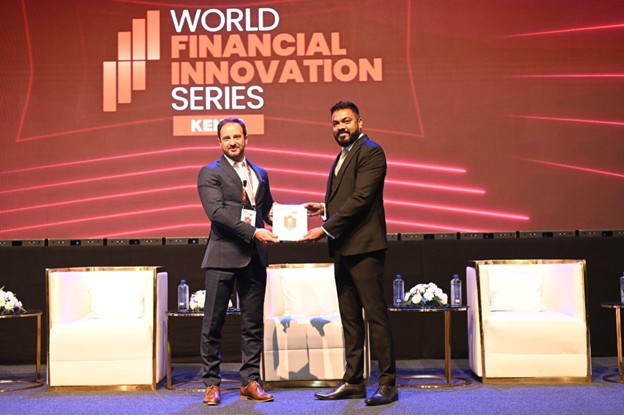
WFIS Kenya offers a structured setting in which banking executives, fintech innovators, regulators, as well as infrastructure experts, directly engage with financial services technologies and innovations. The setting enables financial institutions to assess digital banking solutions, identity verification solutions, cybersecurity solutions, as well as regulatory technology solutions impacting financial services sector evolution.
For organizations navigating digital transformation within complex financial ecosystems, such gatherings offer more than networking. They create environments where industry leaders exchange operational knowledge, explore technology partnerships, plus analyze strategic approaches to financial innovation. Within the broader landscape of global industry events, WFIS Kenya continues to operate as a recognized financial services conference supporting collaboration, technology insight, and informed leadership across the financial sector.